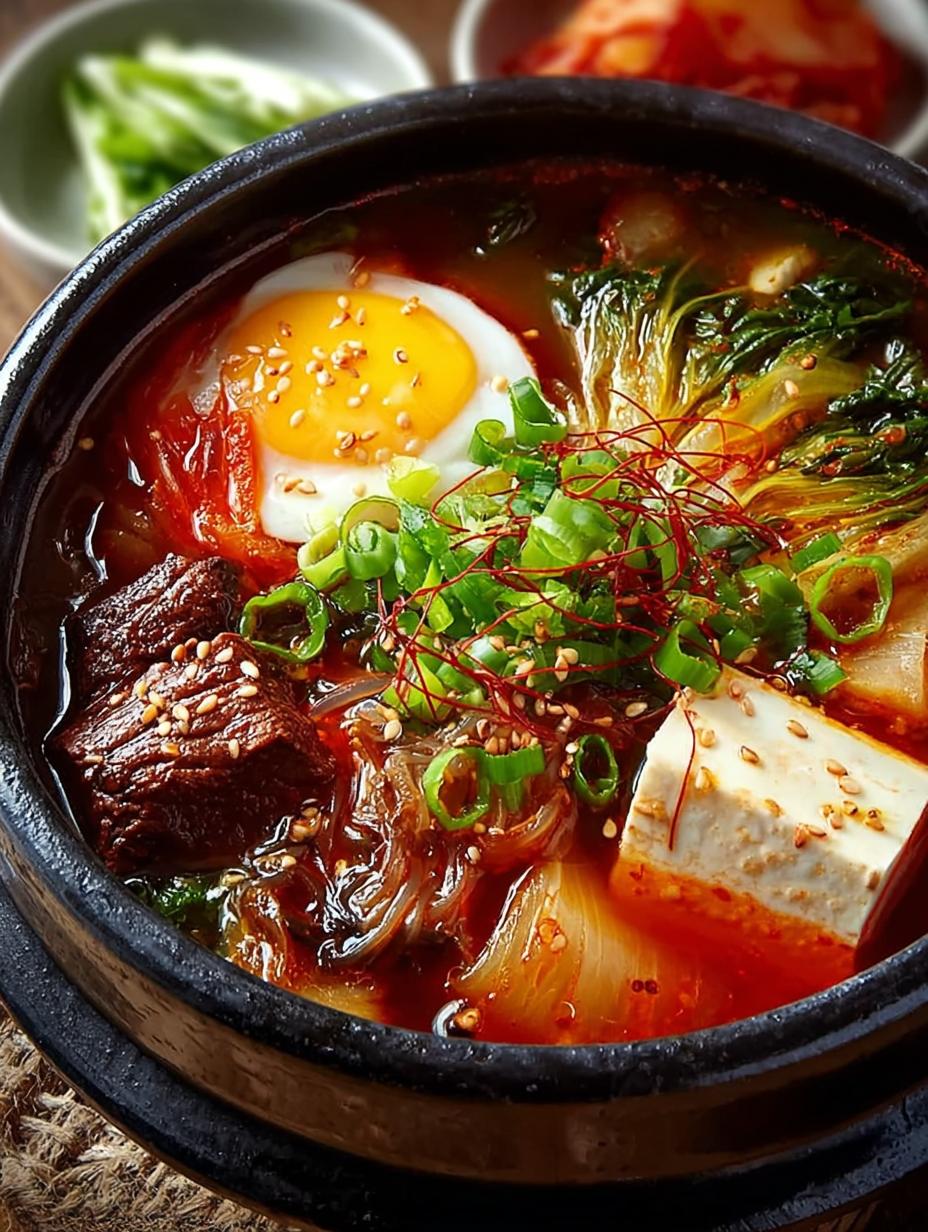
Korean Winter Soup is a hearty and comforting dish that warms the soul on cold nights. Featuring tender beef brisket and fresh vegetables simmered in a rich, spicy Korean broth, this soup is perfect for sharing with family or enjoying solo. The combination of gochujang and gochugaru creates a delightful heat that makes every spoonful satisfying. As the chilly winds blow outside, there’s nothing quite like a bowl of this authentic Korean comfort food to bring warmth and happiness.
Why You’ll Love This Korean Winter Soup
This Korean Winter Soup is not just delicious; it offers numerous benefits that make it a must-try:
- Hearty and filling, perfect for cold weather.
- Rich in protein from beef brisket and tofu.
- Loaded with nutritious vegetables, including napa cabbage and daikon radish.
- Easy to customize with various spices for desired heat.
- Great as a warming meal for family gatherings.
- Can be prepared quickly on a stovetop, making it a fantastic weeknight dinner option.
- Offers a taste of authentic Korean cuisine right in your kitchen.
Ingredients for Korean Winter Soup
Gather these items:
- 1 pound beef brisket (cut into 2-inch pieces)
- 8 cups water
- 3 tablespoons soy sauce
- 2 tablespoons Korean red pepper paste (gochujang)
- 1 tablespoon Korean red pepper powder (gochugaru)
- 4 cloves garlic (minced)
- 1 large onion (chopped)
- 2 cups napa cabbage (sliced)
- 14 oz firm tofu (cubed (1 block))
- 1 cup daikon radish (sliced)
- 2 tablespoons sesame oil
- 2 stalks green onions (sliced)
- salt and pepper (to taste)
- cooked white rice (for serving)
How to Make Korean Winter Soup Step-by-Step
- Step 1: In a large pot, add the beef brisket and water. Bring to a boil over high heat, then reduce to a simmer for about 30 minutes until the beef is tender. Keep the lid slightly ajar to prevent overflows and stir occasionally.
- Step 2: Skim off any impurities that rise to the surface using a fine-mesh skimmer. Gently skim the top every few minutes until the broth is clear and free of foam.
- Step 3: Add the soy sauce, gochujang, gochugaru, and minced garlic into the pot. Stir well to combine, making sure the chili paste dissolves fully into the broth for an even, rich color.
- Step 4: Add the chopped onion, napa cabbage, tofu cubes, and daikon radish. Continue to simmer the soup for another 20 minutes, allowing the vegetables to soften and the tofu to absorb the spicy, savory flavors.
- Step 5: In a small pan, heat the sesame oil over medium heat. Add the sliced green onions and sauté until fragrant, about 1-2 minutes. Pour this aromatic oil and onion mixture into the soup.
- Step 6: Season the soup with salt and pepper to taste. Adjust as necessary – add more soy sauce for depth or a pinch of gochugaru for extra heat.
- Step 7: Serve hot with steamed white rice on the side. Ladle generously into bowls, letting the rice soak up the spicy broth for a satisfying, warming meal.

Pro Tips for the Best Korean Winter Soup
Keep these in mind:
- This soup is perfect for cold winter nights.
- Adjust the level of spice by varying the amount of gochugaru.
- Store leftovers in the refrigerator for up to 3 days.
- For a creamier texture, blend some of the soup and return it to the pot.
Best Ways to Serve Korean Winter Soup
Here are some delightful ideas to serve your soup:
- Enjoy it with a side of steamed rice or noodles for a filling meal.
- Pair with kimchi for an authentic Korean experience.
- Serve with a sprinkle of sesame seeds and extra green onions for garnish.
How to Store and Reheat Korean Winter Soup
To store leftovers, cool the soup to room temperature and transfer it to an airtight container. It can be kept in the refrigerator for up to 3 days. When ready to enjoy, reheat on the stovetop over medium heat until warmed through, making it an excellent option for meal prep.
Frequently Asked Questions About Korean Winter Soup
What’s the secret to perfect Korean Winter Soup?
The secret lies in balancing the spices and ensuring that the beef is simmered until perfectly tender. Using high-quality ingredients, especially the gochujang and gochugaru, enhances the flavor significantly.
Can I make Korean Winter Soup ahead of time?
Absolutely! This soup tastes even better the next day as the flavors meld together. Just store it in the fridge and reheat before serving for a quick meal.
How do I avoid common mistakes with Korean Winter Soup?
To avoid mistakes, ensure you skim off impurities for a clear broth. Don’t rush the simmering process; allowing the beef to become tender is key for the best texture.
Variations of Korean Winter Soup You Can Try
Here are some delicious variations to consider:
- For a vegetarian version, substitute beef with mushrooms and increase the vegetable content.
- Add more greens, such as spinach or bok choy, for extra nutrition.
- Incorporate different types of noodles for a heartier dish, making it a perfect Korean hot soup.

For more delicious recipes, check out our latest recipes or try making Slow Cooker Korean Beef for a different take on Korean flavors. You can also explore Korean BBQ Meatballs for a tasty appetizer option.
Print
Delicious Korean Winter Soup for Comforting Nights
- Total Time: 65 minutes
- Yield: 4 servings 1x
- Diet: Gluten Free
Description
Tender beef brisket and fresh vegetables simmered in a rich, spicy Korean broth. Perfect comfort food for cold winter nights.
Ingredients
- 1 pound beef brisket (cut into 2-inch pieces)
- 8 cups water
- 3 tablespoons soy sauce
- 2 tablespoons Korean red pepper paste (gochujang)
- 1 tablespoon Korean red pepper powder (gochugaru)
- 4 cloves garlic (minced)
- 1 large onion (chopped)
- 2 cups napa cabbage (sliced)
- 14 oz firm tofu (cubed (1 block))
- 1 cup daikon radish (sliced)
- 2 tablespoons sesame oil
- 2 stalks green onions (sliced)
- salt and pepper (to taste)
- cooked white rice (for serving)
Instructions
- In a large pot, add the beef brisket and water. Bring to a boil over high heat, then reduce to a simmer for about 30 minutes until the beef is tender. Keep the lid slightly ajar to prevent overflows and stir occasionally.
- Skim off any impurities that rise to the surface using a fine-mesh skimmer. Gently skim the top every few minutes until the broth is clear and free of foam.
- Add the soy sauce, gochujang, gochugaru, and minced garlic into the pot. Stir well to combine, making sure the chili paste dissolves fully into the broth for an even, rich color.
- Add the chopped onion, napa cabbage, tofu cubes, and daikon radish. Continue to simmer the soup for another 20 minutes, allowing the vegetables to soften and the tofu to absorb the spicy, savory flavors.
- In a small pan, heat the sesame oil over medium heat. Add the sliced green onions and saute until fragrant, about 1-2 minutes. Pour this aromatic oil and onion mixture into the soup.
- Season the soup with salt and pepper to taste. Adjust as necessary – add more soy sauce for depth or a pinch of gochugaru for extra heat.
- Serve hot with steamed white rice on the side. Ladle generously into bowls, letting the rice soak up the spicy broth for a satisfying, warming meal.
Notes
- This soup is perfect for cold winter nights.
- Store leftovers in the refrigerator for up to 3 days.
- Prep Time: 15 minutes
- Cook Time: 50 minutes
- Category: Soup
- Method: Stovetop
- Cuisine: Korean
Nutrition
- Serving Size: 1 bowl
- Calories: 450
- Sugar: 3 g
- Sodium: 800 mg
- Fat: 26 g
- Saturated Fat: 6 g
- Unsaturated Fat: 15 g
- Trans Fat: 0 g
- Carbohydrates: 22 g
- Fiber: 3 g
- Protein: 35 g
- Cholesterol: 80 mg
Keywords: Korean Winter Soup, Comfort Food, Spicy Soup, Beef Soup