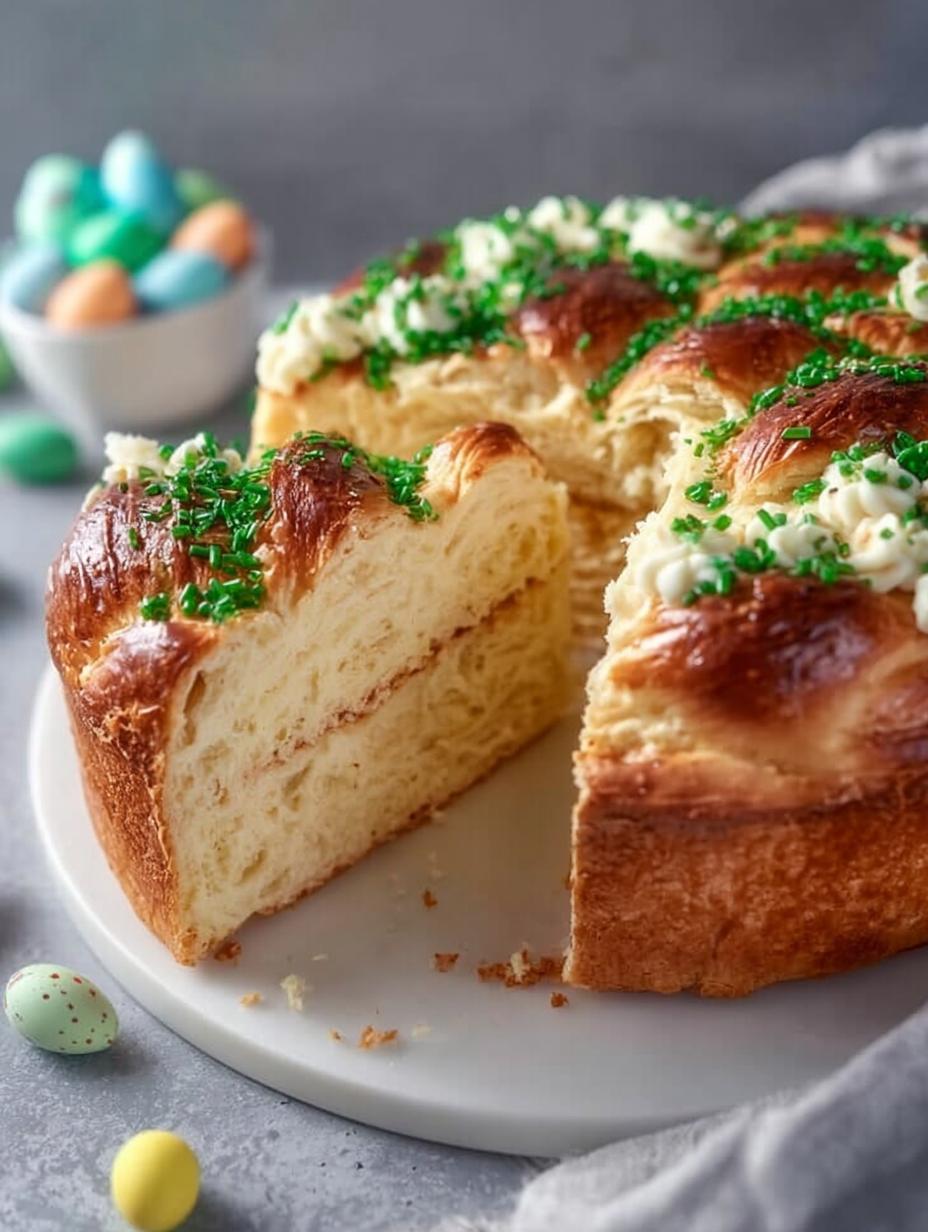
Easter Bread is a delightful and traditional holiday bread that adds a touch of sweetness and color to any Easter celebration. This soft, lightly sweet braided bread is not only visually stunning but also a symbol of new beginnings and renewal. Perfect for your Easter brunch table, this bread is a cherished recipe across various cultures, including Greek and Italian traditions. Let’s explore how to create this beautiful holiday bread that everyone will love!
Why You’ll Love This Easter Bread
This Easter bread will become a family favorite for many reasons. First, it’s a fun project that allows everyone to participate in the cooking process. Second, the aroma of baking bread fills the house with warmth and comfort. Third, it features colorful dyed eggs, making it a beautiful centerpiece. This traditional Easter bread recipe is easy to follow, and you can customize it with various flavors or toppings. Plus, it’s a fantastic way to celebrate spring and share a delicious treat with loved ones. Whether you’re making a Greek Easter bread or an Italian Easter loaf, this sweet Easter bread recipe will surely impress!
Ingredients for Easter Bread
Gather these items:
- ¼ cup water (warm (100-110 degrees))
- 1 tbsp active yeast (1 packet)
- 1 cup warm milk
- ½ cup sugar
- 4 tbsp unsalted butter (softened)
- 3 large eggs (divided, room temperature)
- 3 ½ cups all-purpose flour
- 2 tsp salt
- 1 teaspoon vanilla extract
- 5 dyed eggs not cooked
- 2 tbsp whole milk
- 1 cup confectioners sugar
How to Make Easter Bread Step-by-Step
- Step 1: Before making the bread, dye the eggs using an egg-dyeing kit from the grocery store.
- Step 2: To dye uncooked eggs, follow the same instructions as for hard-boiled eggs. Let the eggs dry completely.
- Step 3: Heat the water to 100-110 degrees, then add the active dry yeast.
- Step 4: Stir the warm water and yeast together and let it stand for 5-10 minutes to bloom.
- Step 5: Heat the milk in a small saucepan over medium-high heat for 2-3 minutes. Do not boil.
- Step 6: Remove from heat and whisk in sugar, salt, and butter until melted.
- Step 7: Pour the milk mixture into a stand mixer bowl and add 1 cup of flour. Beat for one minute.
- Step 8: Add the yeast mixture and two room-temperature eggs; beat on low for one minute.
- Step 9: Gradually add the remaining flour; the dough should be slightly sticky.
- Step 10: Grease a large bowl, place the dough in it, and cover with plastic wrap in a warm area. Let it rise for 1.5 hours.
- Step 11: Once risen, turn the dough out onto a floured surface and divide it into two balls.
- Step 12: Roll each ball into 1-inch-thick ropes and braid them together.
- Step 13: Form a circle with the braid and pinch the ends together.
- Step 14: Cover and let it rise again for 30-45 minutes.
- Step 15: Preheat the oven to 350 degrees and transfer the dough to a greased baking sheet.
- Step 16: Place the colored eggs into the braids, leaving space between them.
- Step 17: Whisk the remaining egg for an egg wash and brush over the bread.
- Step 18: Bake for 25-30 minutes until golden brown. Rotate the baking sheet halfway for even baking.
- Step 19: Cool on a wire rack for 1-1.5 hours.
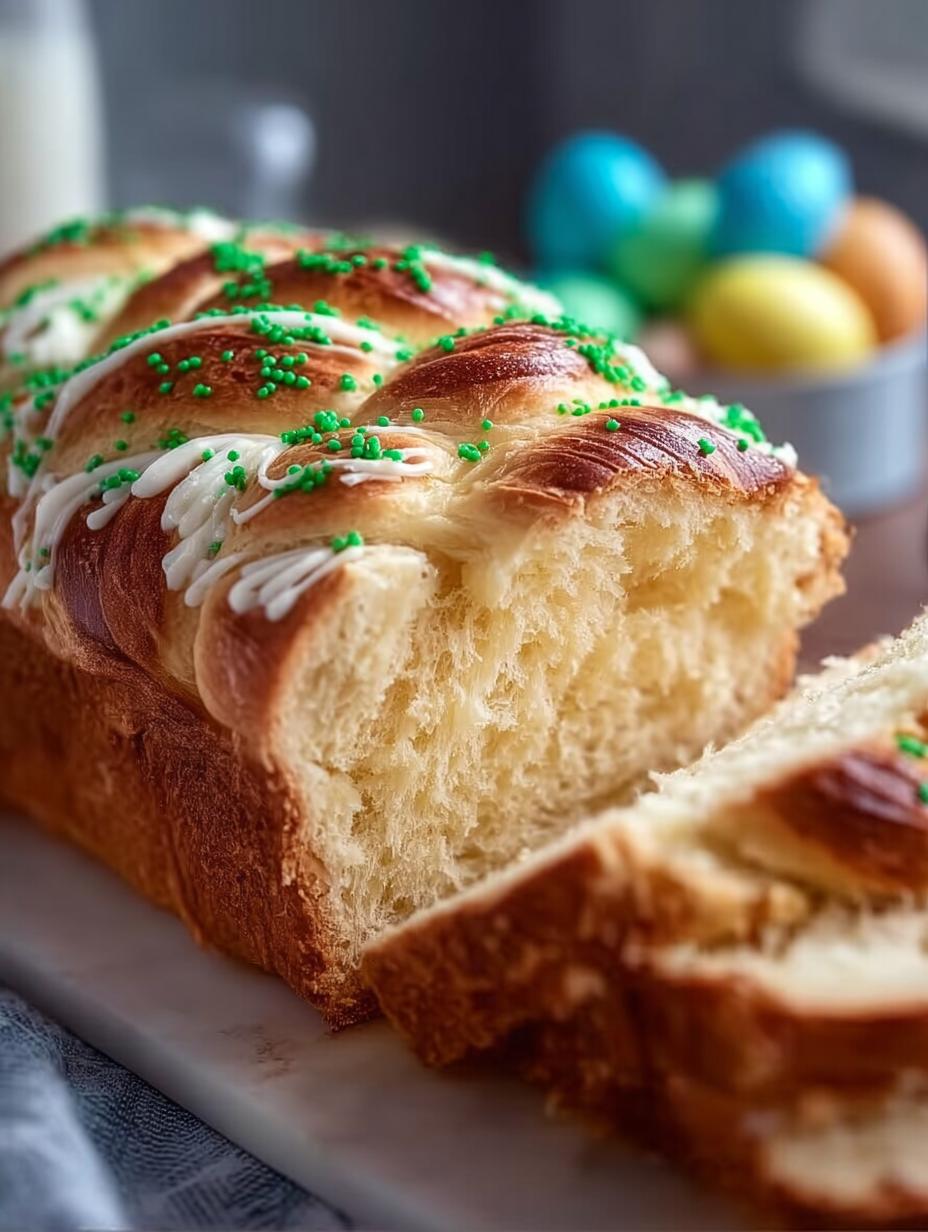
- Step 20: Prepare the glaze by whisking confectioners sugar and milk. Drizzle over the cooled bread and top with sprinkles.
Pro Tips for the Perfect Easter Bread
Keep these in mind:
- Ensure your water temperature is accurate to avoid killing the yeast.
- Don’t rush the rising time; it’s crucial for a fluffy texture.
- Experiment with flavors by adding citrus zest or spices to the dough.
- This recipe can be adapted for a vegetarian diet, making it even more inclusive.
Best Ways to Serve Easter Bread
Here are a few serving suggestions for your Easter bread:
1. Serve it warm, sliced, and spread with butter or cream cheese for a delightful breakfast.
2. Pair it with fresh fruit and yogurt for a light brunch option.
3. Use it as a base for French toast by soaking slices in an egg mixture and frying them.
How to Store and Reheat Easter Bread
To store leftover Easter bread, wrap it tightly in plastic wrap or aluminum foil and keep it at room temperature for up to three days. For longer storage, freeze it in an airtight container. To reheat, simply thaw and warm slices in the oven or toaster, bringing back that fresh-baked flavor.
Frequently Asked Questions About Easter Bread
What’s the secret to perfect Easter Bread?
The secret lies in the dough’s rising time and temperature. Allow the dough to rise in a warm, draft-free area until it doubles in size for the best texture.
Can I make Easter Bread ahead of time?
Yes! You can prepare the dough a day in advance, let it rise, and then shape it. Refrigerate it overnight and bake it fresh in the morning for a delightful breakfast treat.
How do I avoid common mistakes with Easter Bread?
Common mistakes include using water that’s too hot, which can kill the yeast, and not allowing enough rising time. Follow the recipe closely for best results!
Variations of Easter Bread You Can Try
Consider these variations for your Easter bread:
1. **Add-ins:** Incorporate raisins or chocolate chips into the dough for added sweetness.
2. **Toppings:** Decorate with nuts or dried fruits on top before baking.
3. **Flavor Twists:** Try infusing the dough with orange or lemon zest for a citrusy twist. This recipe is versatile and can fit different dietary needs.

For more delicious recipes, check out our latest recipes or try making cranberry orange pancakes for a delightful breakfast option.
For more information on the cultural significance of Easter bread, you can read about it on History.com (rel=”nofollow”).
Print
Easter Bread: 5 Steps to Create This Sweet Holiday Treat
- Total Time: 160 minutes
- Yield: 1 loaf 1x
- Diet: Vegetarian
Description
Soft, lightly sweet braided Easter bread, baked until golden. A traditional holiday bread perfect for Easter brunch tables and spring celebrations.
Ingredients
- ¼ cup water (warm (100–110 degrees))
- 1 tbsp active yeast (1 packet)
- 1 cup warm milk
- ½ cup sugar
- 4 tbsp unsalted butter (softened)
- 3 large eggs (divided, room temperature)
- 3 ½ cups all-purpose flour
- 2 tsp salt
- 1 teaspoon vanilla extract
- 5 dyed eggs not cooked
- 2 tbsp whole milk
- 1 cup confectioners sugar
Instructions
- Before making the bread, you will want to dye the eggs. We used a package of egg-dyeing supplies from the local grocery store.
- To dye uncooked eggs, follow the same instructions on the packaging as for hard-boiled eggs. Dying the eggs in advance and letting them dry fully before placing them in the bread will keep the dye from running.
- Heat the water to 100-110 degrees, then add the active dry yeast.
- Stir the warm water and yeast together.
- Then let stand for 5-10 minutes to allow the yeast to bloom.
- Add the milk to a small saucepan and heat over medium-high heat for about 2-3 minutes. Do not let it boil.
- Remove the pan from the heat and add the sugar, table salt, and butter. Whisk together until the butter is incorporated into the warm milk.
- Add the milk mixture to the bowl of a stand mixer with the paddle attachment (or a large mixing bowl with an electric mixer).
- Add one cup of flour to the mixing bowl and beat for one minute to combine the flour with the milk.
- Add the yeast mixture and two room-temperature eggs to the combined mixture, then beat on low speed for an additional minute until combined.
- Add the remaining flour to the bowl and mix at low speed to incorporate it. The dough should be a little sticky. Scrape the bottom and sides of the bowl with a rubber spatula if needed.
- Lightly grease a large bowl, dump the dough into it, and cover with plastic wrap and a towel in a warm, non-drafty area in your home.
- Allow the dough to rise for about 1.5 hours, until it has doubled in size.
- Lightly flour a pastry mat or cutting board, then turn the dough out onto it.
- Divide the dough into 2 evenly sized dough balls.
- Roll each ball out longways by stretching and rolling it into about 1-inch-thick ropes.
- Braid the two dough rolls together loosely to allow room for expansion.
- Form a circle with the braids, then pinch the ends together.
- Cover and allow for the second rise or proofing for about 30-45 minutes.
- Preheat your oven to 350 degrees.
- Transfer the ropes to a lightly greased baking sheet.
- Place the colored eggs into the braids at various spots, leaving space between them. Do not overdo the crowd with eggs; you want to add their aesthetics, but you do not want them to affect the cooking process.
- Crack the remaining egg into a small bowl.
- Whisk the egg to create the egg wash.
- Brush the proofed bread with the egg wash and bake for 25-30 minutes at 350 degrees until golden brown. (Tip – Spin the baking sheet halfway through for an even browning of the bread.)
- Once done cooking, remove from the oven and carefully transfer the bread to a wire rack to cool for about an hour to an hour and a half.
- To create the creamy glaze, add the powdered sugar and milk to a small bowl.
- Whisk the powdered sugar and milk together until smooth.
- Using a fork or a rubber spatula, drizzle the glaze over the cooled bread and sprinkle with pastel-colored sprinkles.
Notes
- Prep Time: 120 minutes
- Cook Time: 30 minutes
- Category: Bread
- Method: Baking
- Cuisine: Traditional
Nutrition
- Serving Size: 1 slice
- Calories: 442
- Sugar: 14 g
- Sodium: 200 mg
- Fat: 12 g
- Saturated Fat: 7 g
- Unsaturated Fat: 3 g
- Trans Fat: 0 g
- Carbohydrates: 71 g
- Fiber: 2 g
- Protein: 13 g
- Cholesterol: 70 mg
Keywords: Easter Bread, Holiday Bread, Spring Celebrations